You’ve completed your egg retrieval, and the immediate relief washes over you. The procedure went smoothly, and you’re resting comfortably. But as the anesthesia wears off and you prepare to head home, questions start forming in your mind. What comes next? How will your body recover? What kind of follow-up care should you expect? Understanding the post-retrieval health monitoring process can ease your worries and help you feel confident about the weeks ahead.
At Signature Donors, we believe in supporting you through every stage of your donation journey. With decades of professional experience connecting compassionate donors with aspiring parents, we emphasize education and unwavering support from your first inquiry through your complete recovery. Our team ensures you understand what to expect during post-retrieval monitoring so you can focus on healing and celebrating your generous contribution.
What to Expect During Post-Retrieval Health Monitoring as an Egg Donor
The post-retrieval monitoring process follows a carefully structured timeline designed to ensure your complete recovery and well-being. Each phase of follow-up care serves a specific purpose, from immediate observation to long-term health tracking. Understanding these stages helps you recognize what’s normal and when to seek additional support.
Immediate Recovery and First 24 Hours
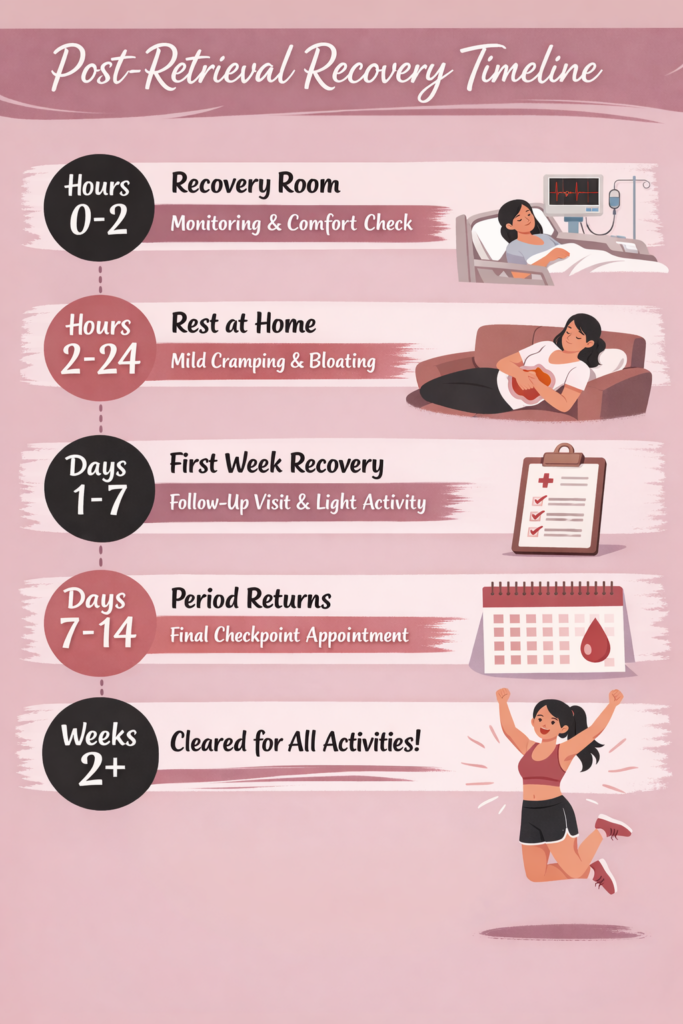
The moments immediately following your egg retrieval set the foundation for your recovery. After the brief procedure, which typically lasts 15 to 30 minutes, you’ll wake up in a recovery area where medical staff will monitor your vital signs and ensure you’re comfortable. This initial observation period usually lasts one to two hours, during which the clinic confirms you’re stable and ready for discharge.
During the first 24 hours at home, rest becomes your primary focus. Your body needs time to process the anesthesia and begin healing from the procedure. Most donors experience mild cramping similar to menstrual discomfort, along with some bloating. These symptoms are completely normal and typically manageable with over-the-counter pain medication recommended by your fertility clinic. You should avoid driving, alcohol consumption, and lifting anything heavy during this critical recovery window.
The First Week
Within the first week after your retrieval, your body starts returning to its baseline state. The hormone stimulation medications you took during the donation cycle will gradually leave your system, and any bloating or discomfort should steadily decrease. Most egg donors return to their normal activities within a day or two, though individual recovery timelines can vary.
Most fertility clinics will likely require follow-up bloodwork within the first week to check on your recovery. Medical staff may perform an ultrasound to confirm your ovaries are returning to normal size and that there are no concerning fluid collections. They’ll also check for any signs of ovarian hyperstimulation syndrome (OHSS), a rare but serious complication that requires immediate attention. According to Mayo Clinic, most cases are mild and resolve within one to two weeks, though severe cases require hospitalization and careful monitoring.
It’s important to continue avoiding high-intensity exercise and sexual activity during this week. Your ovaries remain enlarged and vulnerable, making strenuous activities potentially harmful. Light walking and gentle movement are encouraged, but save the gym workouts and running for later in your recovery.
Menstrual Cycle Return and Long-Term Follow-Up
One of the most significant milestones in your post-retrieval monitoring occurs when your period returns. Most donors get their period within one to two weeks after the egg retrieval, though some may experience a slightly delayed cycle. When menstruation begins, you’ll typically schedule another follow-up appointment to confirm your hormones have stabilized and your ovaries have returned to their pre-donation size.
This appointment is the final checkpoint in your immediate recovery process. Your medical team will confirm everything has returned to normal and that you’re cleared to resume all regular activities, including intense exercise and sexual activity. For many donors, this visit brings a sense of closure and accomplishment, marking the successful completion of their donation journey.
Long-term health monitoring extends beyond these initial weeks. Reputable egg donation programs maintain communication with donors to track any delayed complications or concerns. While serious long-term health effects from egg donation are extremely rare, ongoing monitoring ensures that any unexpected issues are promptly and comprehensively addressed.
Recognizing Warning Signs of Complications
Understanding which symptoms warrant immediate medical attention empowers you to advocate for your health during recovery. While mild cramping and bloating are expected, certain warning signs should never be ignored. Severe abdominal pain, rapid weight gain of more than two pounds per day, difficulty breathing, decreased urination, or persistent nausea and vomiting could indicate OHSS or other complications requiring urgent care.
Don’t hesitate to contact your fertility clinic or egg donation program if something feels wrong. Your health and safety remain the top priority throughout this process, and medical professionals would rather evaluate a false alarm than miss a genuine concern. Trust your instincts about your body and seek help when needed.
Begin Your Egg Donation Journey With Confidence at Signature Donors
Throughout your post-retrieval recovery, you deserve compassionate guidance and responsive care. At Signature Donors, we connect generous women with hopeful parents through a personalized process built on unwavering support and education. Our team remains available to answer your questions, address your concerns, and ensure you feel confident and informed every step of the way.
Whether you’re considering becoming a donor or you’ve already completed your retrieval, understanding the monitoring process helps you feel prepared and empowered. Apply to be a donor today to begin your own meaningful journey. For questions about the donation process or post-retrieval care, contact our team to speak with someone who understands your experience.